
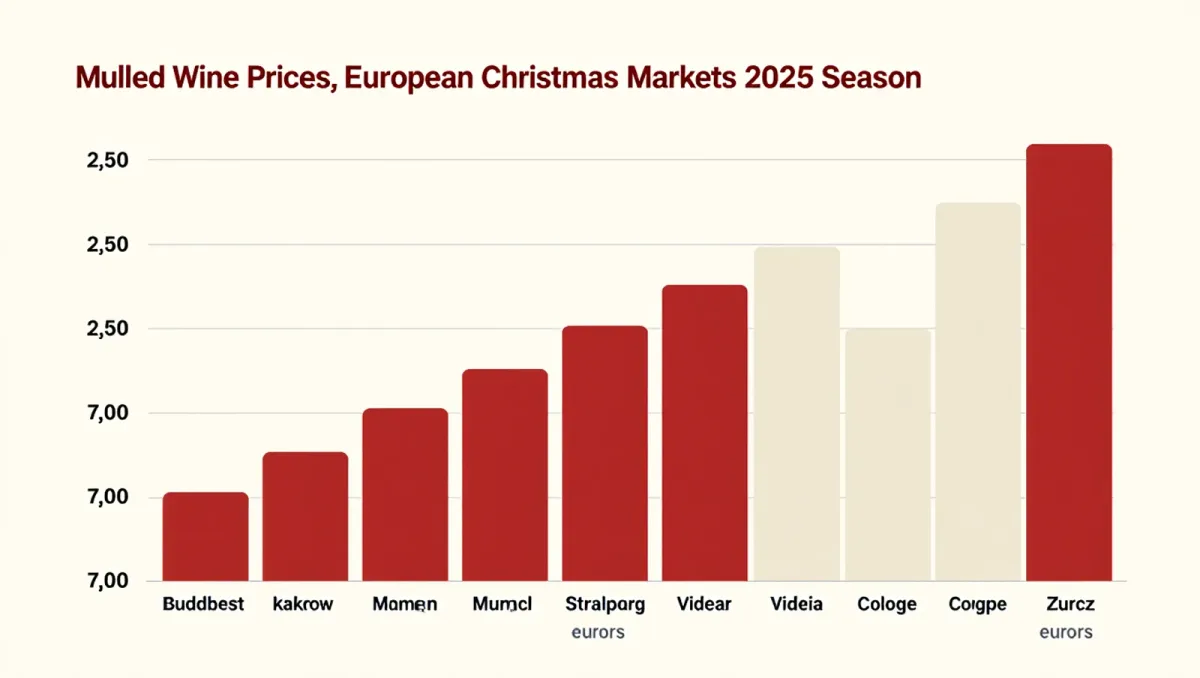
A mug of Glühwein costs €3–€5 in Munich and Vienna, €6–€8 in Zurich, and €2–€4 in Budapest or Kraków, based on posted market prices checked January 2026. Add a €3–€5 mug deposit (Pfand) that you get back when you return the cup, and a couple can spend €25–€40 an evening on drinks and snacks at a mid-priced German market — more in Switzerland, half that in Poland.
Christmas markets have become a booking season of their own, and the price spread between cities is now big enough to shape where you should go. This piece is a planning tool for next December, written in January with the season over and the numbers visible. Prices move, so every figure is dated — and this publication publishes information, not travel-purchase advice.
How much is mulled wine at major markets?
| City | Glühwein / grzaniec / forralt bor (2025 season, checked Jan 2026) |
|---|---|
| Budapest | €2–€3.50 (800–1,400 HUF) |
| Kraków | €2–€3.50 (9–15 PLN) |
| Vienna | €4–€5.50 |
| Munich | €3.50–€5 |
| Cologne | €4–€5.50 |
| Strasbourg | €3.50–€5 |
| Zurich | €6–€8 (5.50–7.50 CHF) |
The deposit system explains half the sticker shock: the printed price is for the wine, and the mug adds €3 or more up front. Return the mug to any stall at the same market and the deposit comes back in cash. Keep the cup if you collect them — collectors pay more than the deposit for branded mugs, which is why stalls design a new one every year.
What does food cost?
- Bratwurst or kielbasa in a roll: €4–€7 in Germany and Austria; €3–€4.50 in Poland, checked January 2026.
- Langos (fried dough, Budapest): 1,500–3,000 HUF (€4–€8) depending on toppings.
- Trdelník (chimney cake, Prague/Vienna): €3.50–€6; the filled versions cost double the plain one.
- Cheese spaetzle or potato pancakes (Germany/Austria): €6–€9 as a full plate.
A realistic dinner-and-drinks budget: €15–€20 per person in Kraków or Budapest, €25–€35 in Munich or Vienna, €40+ in Zurich, checked January 2026.
Related stories: Saint-Ouen Flea Market: What the Puces de Paris Actually Sell, and What Things Cost · Do Farmers Markets Actually Cost More Than Supermarkets? The Price Math.
Are the gifts actually handmade — and what should they cost?
The honest caveat: at most large markets, roughly the same German wooden ornaments and nutcrackers appear in stall after stall, and much of it is factory-made for the Christmas-goods trade. Genuine Erzgebirge carved pieces and Regionalmarkt stalls selling maker's own work are the exception, and they price accordingly: a hand-carved ornament runs €10–€25 versus €3–€6 for the imported, machine-painted equivalent, checked January 2026. Ask who made it. A stallholder who can name the workshop is usually selling the real thing; a shrug means you are buying décor, not craft.
Which cities give you the most for your money?
Per euro spent, Kraków and Budapest are the value picks: market entry is free everywhere (no major European market charges admission; entry fees at a few German fairground events are the exception), food prices run about half of Zurich's, and the setting — Kraków's Rynek Główny, Budapest's Vörösmarty tér — costs nothing to admire. Vienna sits mid-range but spreads dozens of free-entry markets across the city, which stretches a budget further than the per-cup price suggests.
When do the markets open and close?
The big season runs from late November through December 23 or 24; most markets shut down by Christmas Eve, and almost none continue to New Year. Vienna's Christkindlmarkets typically open mid-November, per Vienna tourism board listings for the 2025 season, checked January 2026. Weeknights in the first week of December give you the same stalls with a third of the Saturday crowds.
How do you avoid the worst overpaying?
- Check the mug deposit before you order — it is usually printed on the menu board in small type.
- Eat dinner off-market: a restaurant one street back from the square charges noticeably less for better food.
- Buy ornaments from stalls that name their makers, not from bins of identical factory boxes.
- Skipped-market days cost nothing: the architecture, the lights and the atmosphere are free, so budget only for what you actually consume.
The mug is the metaphor: most of what you pay at a Christmas market is the container, not the wine. Decide which one you came for.
What do drinks besides mulled wine cost?
The seasonal menu prices out predictably: Kinderpunsch (the non-alcoholic option) tracks Glühwein within €0.50; hot chocolate with cream runs €4–€6 in Germany and Austria; a shot of amaro or rum added to any cup adds €1–€2.50; and beer at market stalls is the worst value on the field at €5–€7, checked January 2026. Families should price the children's options before committing to a stall — the spread between them is wider than for the wine.