
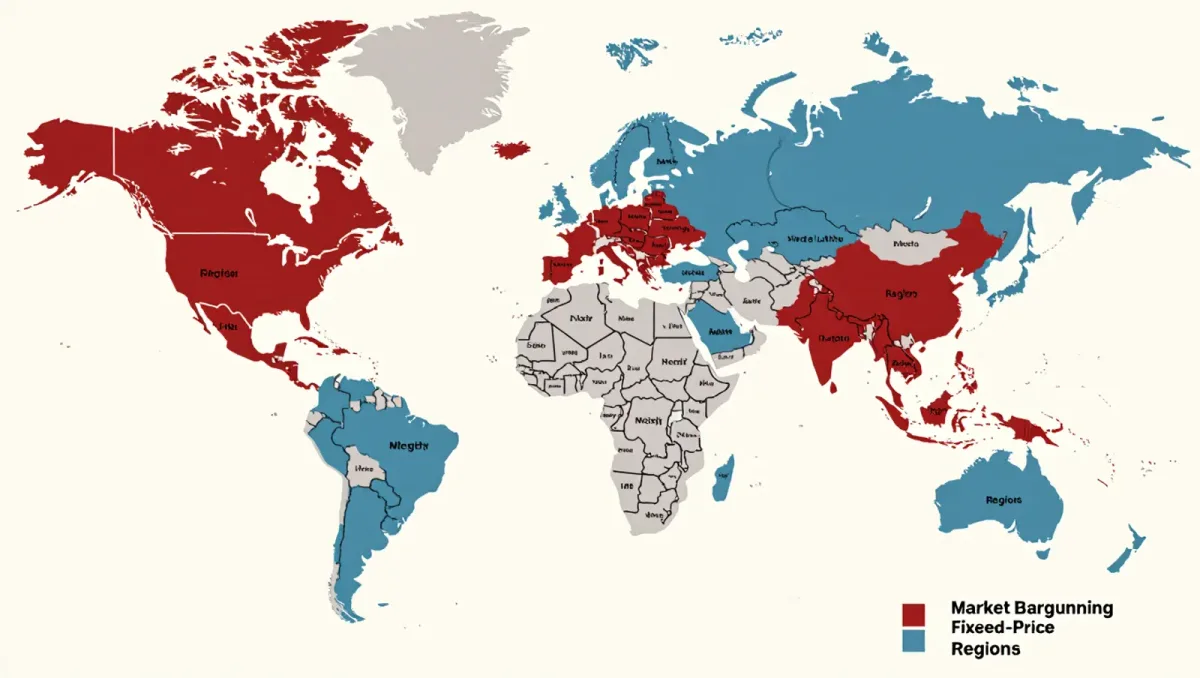
The rule of thumb: in most of North Africa, the Middle East, South and Southeast Asia, and Latin America's informal markets, prices are an opening bid and haggling is expected; in Japan, most of Northern Europe, Australia and standard North American retail, the posted price is the price. The gap between the two is not rudeness on either side — it is two different pricing cultures, and knowing which one you are in saves both money and embarrassment.
Below is the practical map, the etiquette that works in each system, and the traps travelers fall into. Prices and customs checked April 2026. This publication publishes information, not legal advice on local commerce rules.
Where is bargaining expected?
| Region / setting | Bargaining norm | Typical first-offer discount to aim for |
|---|---|---|
| Morocco, Egypt, Turkey — souks and bazaars | Expected; a ritual, not a fight | 30–50% off the first price |
| India, Nepal — bazaars and craft markets | Expected outside fixed-price stores | 30–40% |
| Thailand, Vietnam, Indonesia — night and street markets | Expected at stalls; not in malls | 20–40% |
| China — markets; not in shops with tags | Expected at market stalls | 30–50% at tourist markets |
| Latin America — mercados and artisan stalls | Gentle haggling common | 10–25% |
| Middle East Gulf souks (gold, spices) | Expected on non-fixed goods | 10–30% |
Ranges reflect commonly observed market practice, checked April 2026; tourist-heavy stalls open higher, so the discount looks bigger than it is.
Where should you NOT haggle?
- Japan: the posted price is a commitment to everyone being treated equally. Exceptions are tiny: flea markets, antique fairs and electronics districts for cash purchases of multiple items.
- Northern Europe (Scandinavia, Germany, Netherlands): fixed pricing is a matter of fairness culture. Bargain markets and private sales at flea markets are the exception, not the rule.
- Standard retail in the US, Canada, Australia, UK: chain stores never negotiate. Independent shops, appliance and furniture dealers, and market stalls sometimes will — asking politely (“is there any flexibility on this?”) is fine; bartering is not.
- Food with set prices anywhere: market produce with handwritten prices is usually fixed, even in haggling countries.
Related stories: Is the Tsukiji Outer Market Still Worth Your Time? What to Eat and What It Costs · What Real Saffron and Argan Cost in the Marrakech Spice Souks.
How do you bargain without insulting anyone?
The etiquette that works everywhere haggling is normal, checked against guidebook and local-market guidance as of April 2026:
- Never open bargaining for something you will not buy at your own final price. Walking away after long negotiation burns goodwill and, in small communities, the seller's time.
- Greet first, buy second. In most souk cultures, the transaction is social; a seller who has exchanged two sentences with you discounts more easily than one who has not.
- Counter once, not six times. Offer roughly half of an absurd tourist price, 70–80% of a plausible one, and settle around the middle.
- Let silence work. After your counteroffer, stop talking. The pause closes more deals than any speech.
- Never mock the goods. The line the house draws firmly: haggling that demeans the seller or the craft is not a technique, it is rudeness. Real craft deserves its price — negotiate respectfully or pay it.
How do you know if a price is fair?
Walk away and check the next three stalls. In genuinely bazaared economies, the same object reappears within minutes at every price level; your best information is the spread between stalls, not the seller's opening line. In fixed-price cultures there is nothing to discover — the tag is the market's whole answer.
What about taxis, tours and services?
Agree before you ride, everywhere. In meter-less taxi markets across Africa, Asia and Latin America, the negotiation happens before boarding, and once you are in the seat the price is whatever the driver says. Hotel desks and official tourist offices publish typical fares for common routes — a two-minute check that routinely saves 30–50%, per posted rate information checked April 2026.
The bottom line
Match the system you are standing in: bid in the bazaar, pay the tag in Tokyo, and ask politely in the vast middle ground. The traveler who does this pays less in the first case and keeps goodwill everywhere.
What should you do when the price will not move?
Sellers signal a real floor in ways travelers can read: the offer stops changing for two rounds, the vendor stops wrapping the goods mid-negotiation, or the family member who actually owns the stall gets called over. At that point the price is the price — paying it with good grace keeps the relationship intact and often earns a free extra or a better piece pulled from under the counter. The discount hunt has a floor everywhere; recognizing it is the last haggling skill, checked April 2026.