
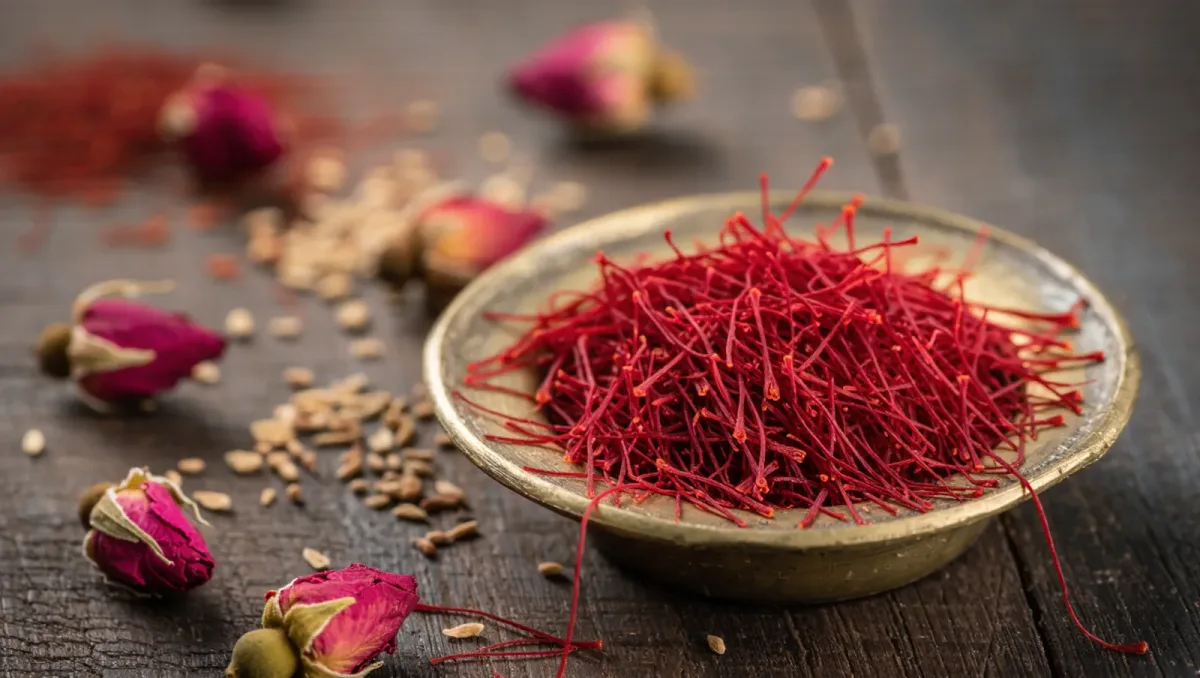
Pure, culinary-grade saffron from Moroccan fields around Taliouine sells in Marrakech's spice souks for roughly 20–45 MAD per gram ($2–$4.50, checked May 2026), with certified origin-denomination saffron at the top of that range. Anything priced dramatically under it is not saffron; anything dramatically above it is a tourist tax. That single number does more work than any authenticity ritual, because saffron is the world's most labor-intensive spice — about 150 flowers for one gram — and the price floor reflects it.
The same logic runs through the rest of the Mellah spice market and the Rahba Kedima square stalls: argan oil, ras el hanout and dried roses all have honest price bands. Below is the full benchmark, plus the tests that work. Prices checked May 2026. This publication publishes information, not purchasing or health advice — and sellers' cosmetic claims about oils deserve the same skepticism everywhere.
What should spices and oils cost in Marrakech?
| Product | Honest price band (May 2026) |
|---|---|
| Saffron, per gram, Taliouine grade | 20–45 MAD ($2–$4.50) |
| Saffron, certified PDO denomination | 40–60 MAD ($4–$6) |
| Argan oil, culinary (roasted), 250 ml | 80–150 MAD ($8–$15) |
| Argan oil, cosmetic, 100 ml, cooperative-purchased | 100–200 MAD ($10–$20) |
| Ras el hanout, per 100 g, blended fresh | 15–40 MAD ($1.50–$4) |
| Dried rosebuds, per 100 g | 10–25 MAD ($1–$2.50) |
Saffron is cheaper in Morocco than in European retail — Spanish and Iranian saffron in US and EU shops commonly runs $8–$15 per gram equivalent — which is precisely why Marrakech souks attract adulterated product aimed at tourists in a hurry.
How do you spot fake saffron?
Named consumer guides and food-fraud reporting, including coverage by BBC and food-safety authorities, describe the same classic adulterants: dyed safflower, turmeric and corn “saffron.” The working checks, as of May 2026:
- The water test. Real saffron threads release yellow-gold color slowly over 10–15 minutes and keep their red color; the threads stay intact and trumpet-shaped at the end. Instant red dye, or threads dissolving into mush, means safflower or turmeric.
- The shape test. Genuine threads are trumpet-flared at one end and uneven in length. Uniform straight “threads” are cut plant material.
- The price test. At one-third of the honest band, chemistry does the rest of the talking.
- The smell test, done honestly. Real saffron smells honeyed and hay-like, not sweet-perfumed. Scent alone never proves purity, but a heavy perfume note is a warning.
Related stories: Do Farmers Markets Actually Cost More Than Supermarkets? The Price Math · Otavalo Market Guide: What Ecuadorian Textiles Should Actually Cost.
Is Moroccan argan oil real in the souks?
The genuine article comes from the argan cooperatives of the Sous valley, and Morocco's appellation system protects the culinary oil as a geographic indication. The honest caveats: cosmetic-grade argan is pressed from unroasted kernels and smells nutty but faint; culinary argan is pressed from roasted kernels and smells like toasted nuts. Clear, scentless “argan” at souvenir-stall prices is usually diluted or substituted — the price band above is the test that matters. Buying from stalls that name their cooperative, checked May 2026, is the strongest signal a traveler gets.
Should you buy spices in the Mellah or at Rahba Kedima?
The Mellah's covered spice lanes are working shops where Moroccan households buy; blends are ground to order and prices track the bands above. Rahba Kedima, the old square, mixes genuine spice shops with souvenir stalls selling pre-bagged blends of uncertain age — the same ras el hanout can differ 40% in price within twenty meters. Compare two or three shops before buying; no haggling culture in the world rewards the buyer who takes the first price at the first stall.
Can you bring spices home?
Most dried, commercially packed spices face no general restriction into the US, UK and EU for personal use, but rules differ by country and item — seeds, whole plants and some dried botanicals can fall under plant-health controls. Confirm your destination's agriculture or customs authority's rules before flying. This is general information, not legal advice.
The bottom line
Know the number before you enter the souk: saffron at 20–45 MAD a gram, argan at cooperative-named stalls, blends ground in front of you. The price band is the authentication lab that fits in your pocket.
How do you buy ras el hanout worth carrying home?
Insist on the blend being ground or mixed in front of you from whole components — the good shops keep roasted cumin, rose petals, cinnamon and a dozen others in separate bins and compose your batch to order. Pre-bagged blends from bins of unknown age lose their top notes within months, which is why the same named spice can taste like hay by the time it reaches your kitchen. A 100-gram bag costs 15–40 MAD, checked May 2026; buy two small bags rather than one large one, and use the first within three months.