
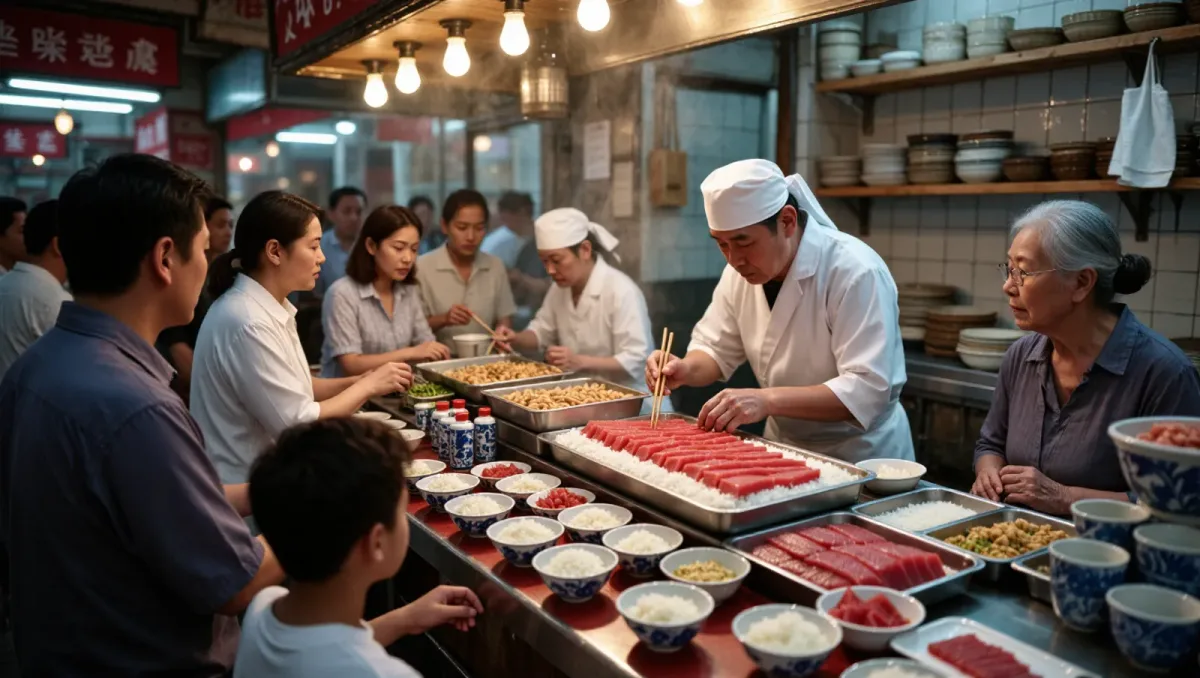
Tsukiji Outer Market is worth roughly two hours of any Tokyo itinerary, and a solid breakfast there costs between ¥1,500 and ¥3,000 per person (about $10–$20, checked December 2025). The famous tuna auction left for Toyosu in October 2018; the retail stalls, restaurants and knife shops around it never moved, and they still open to the public every morning except Sundays and some holidays.
This guide covers prices, timing and the traps, so you can decide between staying in Tsukiji or getting up earlier for Toyosu. Market prices move with the yen and the season, so treat every figure here as a dated snapshot, not a promise — and note that this publication reports information, not purchasing or dietary advice.
What is the difference between Tsukiji Outer Market and Toyosu?
Toyosu Market, about 20 minutes by Yurikamome line from central Tokyo, is the working wholesale market: the tuna auction, wholesale halls and the licensed restaurants on its upper floor. It is clean, controlled and best seen very early — the auction viewing deck admits visitors from around 5:30 a.m., per Toyosu Market visitor information, checked December 2025.
Tsukiji Outer Market (Jogai Shijo) is the retail strip that grew around the old wholesale site in Chuo City. Roughly 400 to 500 shops and restaurants operate in a few narrow blocks, per the Tsukiji Outer Market retail association, checked December 2025. You shop here: grilled seafood on sticks, tamagoyaki (sweet omelette) cooked to order, knife stores, tea shops, and lunch counters serving fresh-off-the-boat fish. Tourists and Tokyo locals share the same lanes.
What does a morning at Tsukiji cost?
Prices checked December 2025, in yen with approximate dollar equivalents:
| Item | Typical price |
|---|---|
| Tamagoyaki on a stick | ¥100–¥200 ($0.70–$1.40) |
| Grilled scallop or unagi skewer | ¥500–¥1,000 ($3.50–$7) |
| Tuna poke / kaisendon bowl at a counter | ¥1,500–¥3,000 ($10–$20) |
| Omakase-style sushi breakfast | ¥3,000–¥6,000 ($20–$40) |
| Matcha or hojicha tea, cup | ¥300–¥600 ($2–$4) |
| Small kitchen knife from a knife shop | ¥5,000–¥30,000+ ($35–$200+) |
The ¥1,500 bowls are the honest core of the market. A ¥6,000 breakfast can be excellent, but at that price you are paying for the counter's reputation as much as the fish.
Related stories: Saint-Ouen Flea Market: What the Puces de Paris Actually Sell, and What Things Cost · Damnoen Saduak Floating Market: Is It Worth the Trip from Bangkok?.
When should you go, and when should you skip it?
Most food stalls trade from roughly 5:00 or 6:00 a.m. to early afternoon; many sell out and close by 1:00 p.m., per market association information, checked December 2025. The sweet spot is 7:00 to 9:00 a.m.: everything is stocked, and the crush of tour groups has not fully arrived. By 10:30 a.m. the main lanes can be shoulder-to-shoulder.
Check the calendar before you go. Most shops close on Sundays and on the market's listed non-trading days, which differ slightly by shop. If your only free morning is a Sunday, Toyosu's restaurant floor is the more reliable bet.
What should you watch out for?
- Eating while walking is discouraged. The market association asks visitors to eat at the stall or in designated areas; bins are scarce because restaurants handle their own waste.
- The first row of stalls on the main street charges more. Walk two rows in and the same grilled scallop is often ¥100–¥200 cheaper. That is not a scam — it is rent.
- Cash still matters. Many stalls take cards and IC cards now, but the smallest omelette and skewer stands can be cash-only; carry ¥3,000–¥5,000 in small notes.
- Knife purchases need paperwork. If you buy a blade, ask the shop about packing and export documentation for your flight; reputable knife stores in Tsukiji handle this daily.
Is the food safe to eat right off the stall?
Japan's food sanitation standards for retail markets are strict and enforced by the Tokyo Metropolitan Government, which inspects market food businesses. Vendors selling raw fish for immediate consumption work in small batches with heavy turnover, which is the real safety mechanism: the good stalls sell out by noon. Choose busy counters, and the same logic that gets locals in line protects you.
How do you get there?
Tsukiji Station (Hibiya Line) and Tsukijishijo Station (Toei Oedo Line) both sit at the market's edge; from Tokyo Station it is about 15 minutes by train plus a short walk, checked December 2025. From Toyosu, the Yurikamome and a transfer gets you to Tsukiji in roughly 30 minutes, which is why some travelers do both in one morning — auction at dawn, breakfast in Tsukiji by 8:00.
The bottom line
Toyosu is where the fish trade happens; Tsukiji is where you eat it. For a first visit, skip the 3:30 a.m. alarm, arrive at Tsukiji by 7:30, spend ¥2,000 on a rice bowl you will remember, and budget one extra row of walking before you buy the first skewer.
What do regulars do differently at Tsukiji?
Locals treat the outer market as a sequence, not a buffet: omelette first while the queues are short, rice bowl second, coffee third. They also shop the non-food edge — the knife and tea shops open earliest and stay calmest, and staff will spend ten minutes explaining a blade you may not buy. Budget ¥500 for the small purchases that make the trip feel like a market rather than a food court, checked December 2025.