
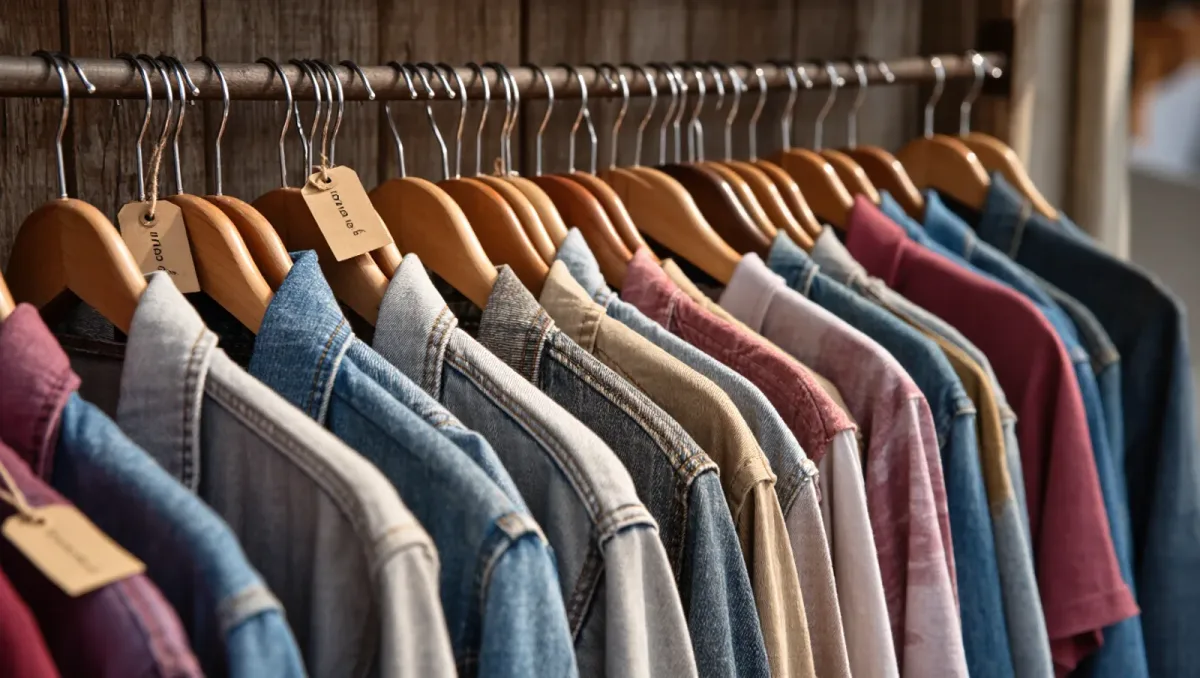
A plain new t-shirt costs $8 at a fast-fashion chain; a used band tee from the same decade costs $40–$150 in a vintage shop. That inversion is the secondhand economy in one example: resale pricing is set by scarcity and culture, not by what an item cost to make. The market behind it is now large enough to be measured by analysts — global secondhand apparel reached an estimated $197 billion in 2023, growing 15% in a year, per the ThredUp Resale Report produced with GlobalData, checked February 2026.
Whether you are selling a closet or buying a wardrobe, the same three-tier structure sets prices everywhere from charity shops to curated resale platforms. This publication publishes information, not financial advice, and resale values are never guaranteed.
What are the tiers of the secondhand market?
| Tier | Channel | Price logic |
|---|---|---|
| Donation / thrift | Charity shops, Goodwill, church rummages | Volume at near-flat prices ($2–$15 typical, checked Feb 2026) |
| Curated resale | Vintage stores, secondhand chains (Vestiaire, Vinted pros, local dealers) | Curation premium; condition and era pricing |
| Platform resale | eBay, Depop, Vinted, Grailed, The RealReal | Auction and comparables; the market price is visible |
The tiers leak into each other by design: resellers buy donation-tier and sell curated-tier, which is why the best charity-shop finds have thinned out as the trade professionalized through the 2020s.
Why does used sometimes cost more than new?
Three forces, in order of importance. First, dead stock: a 1990s sports jersey is a fixed supply that a fandom keeps re-pricing upward. Second, quality drift: older garments — heavy cotton, metal zips, finished seams — often outlast modern equivalents, and buyers price the durability. Third, the culture premium: film releases, artist anniversaries and sport moments reprice categories overnight, which is why “vintage” functions partly as a collectibles market. A t-shirt's $150 price says nothing about the shirt and everything about the logo.
Related stories: Why Are Department Stores Disappearing? The Economics, Explained for Shoppers · Does Cutting Out the Middleman Actually Cut Prices? DTC Brands, Explained.
How do you price something you want to sell?
- Find the comps. Search the sold listings, not the asking listings, on eBay or the relevant platform — unsold asks are wishes, sold prices are the market, checked February 2026.
- Grade honestly. Condition tiers move prices 30–60% between “new with tags,” “excellent” and “visible wear”; photograph flaws. Undisclosed flaws get returned and reviewed.
- Time the category. Wool sells in autumn, festival wear in spring, and graduation-gift watches in June. Off-season listings rot.
- Price the fee stack. Platforms take roughly 5–20% plus payment fees; your net, not your ask, is the number to compare, checked February 2026.
How do you buy secondhand without overpaying?
- Learn three authenticating details per brand you chase. Stitch counts, tag eras and label fonts; resale fraud clusters around brands people cannot authenticate. Marketplaces have made progress on verification for high-value items — The RealReal and Vestiaire run in-house authentication for luxury goods — but the $80–$300 range is where fakes live unchecked.
- Bid late, not early. Auction sniping is standard practice; early bids only raise the price you pay.
- Weigh shipping into every thrift “steal.” Online thrift shipping plus fees frequently erases the discount versus a local shop.
Is secondhand actually cheaper for a whole wardrobe?
Yes, structurally — a curated-thrift or platform strategy lands a functional wardrobe at perhaps a third of new-retail cost, checked February 2026, and resale's growth has made selection better each year. The exceptions are the hype categories, where the secondhand premium is real and the buyer is paying for access, not clothing.
The bottom line
Secondhand is now two markets wearing one label: a discount market where patience pays, and a collectibles market where scarcity pays. Know which one you are standing in before you argue about the price.
What happens to clothes nobody buys secondhand?
The tiers end somewhere: charity-shop reject volume flows to textile recyclers and, historically, to export markets in West Africa and Eastern Europe, where several receiving countries have begun restricting imports of low-grade clothing. For the shopper the takeaway is practical — the discount tier's pricing reflects the donation flood, and quality thrifting now means shopping the racks the resellers have already passed over with better eyes, checked February 2026. Buy the good fiber wherever you find it; the rest of the pile is a logistics problem, not a wardrobe.