
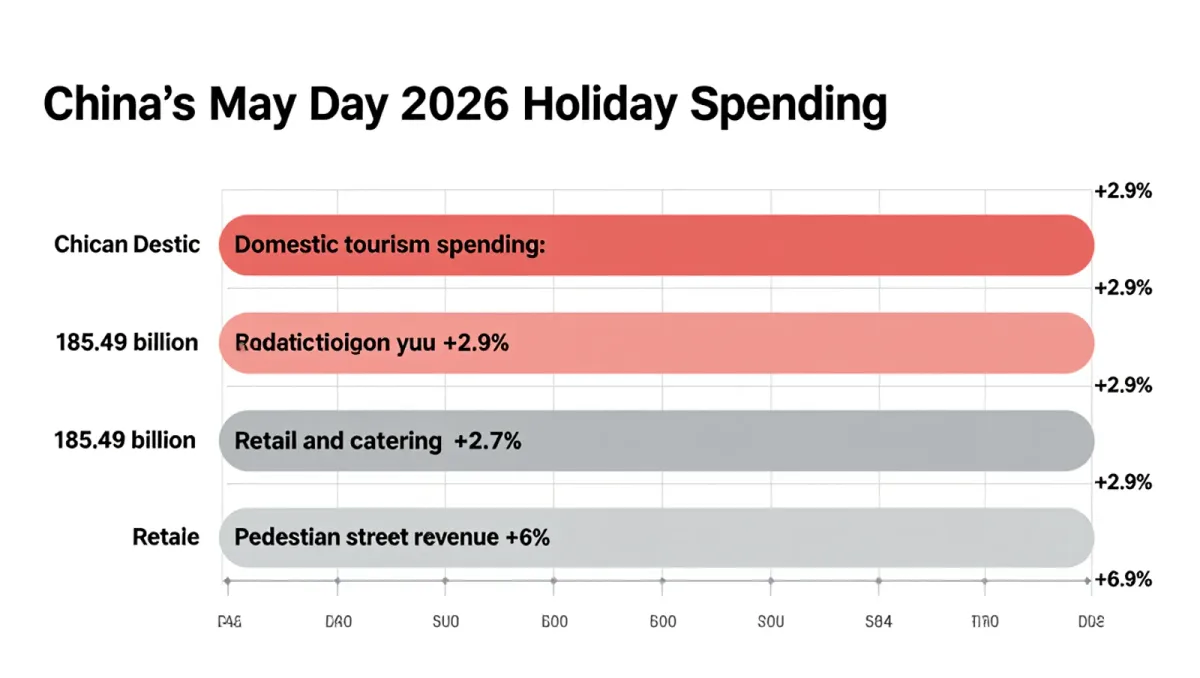
Domestic tourism spending during China's 2026 May Day holiday reached 185.49 billion yuan (about USD 27.3 billion), up 2.9 percent year on year, per official data reported by Reuters and China's State Council information office on May 7, 2026. The mixed signal inside that headline: trips grew faster than spending, meaning travelers took more, shorter holidays and spent less per trip — a budget-conscious pattern that shapes what retailers and markets can expect from Chinese shoppers this year.
This is coverage of official holiday statistics, not travel or investment advice; the underlying figures come from China's Ministry of Culture and Tourism and are subject to the agency's own methodology.
What did the holiday numbers actually show?
Three numbers stand out. Total tourism-related consumption across the cultural and tourism market exceeded 800 billion yuan over the holiday period, per gov.cn. Retail and catering sales rose 2.7 percent year on year during the holiday, based on VAT invoice data. And revenue in key business districts and pedestrian streets climbed 6 percent — the strongest figure in the set, and the one most relevant to shopping streets. More than 1.5 billion trips were forecast across the five-day break, and pre-holiday travel searches had jumped 364 percent month on month per Tongcheng Travel, so the volume was expected; the softness showed up in per-trip spending, not attendance.
Related stories: Singles Day 2025 Sales Hit RMB 1.695 Trillion — but the Platforms Stopped Telling You the Price · China's 618 Festival Growth Slowed Sharply in 2026 — Tmall Led, and the Deals Came Earlier.
Why are travelers spending less per trip?
Per Reuters reporting on the data, rising airfares and fuel costs pushed many travelers toward cheaper, closer-to-home trips. The pattern matters for shopping travelers in two ways. In domestic Chinese markets, it favors local markets, pedestrian streets, and drive-to destinations over long-haul splurges — consistent with the 6 percent gain in pedestrian-street revenue. For destinations competing for Chinese outbound spending, it is a caution: the same budget discipline that trims per-trip domestic spending tends to travel with the tourist, favoring value-led retail over luxury flagships.
What should shopping destinations take from it?
The trade signal is volume without margin. Streets and markets that monetize foot traffic through small, frequent purchases — food, snacks, modest souvenirs — captured the growth; big-ticket retail did not lead. Expect the same pattern around China's next holiday windows, including the October Golden Week, unless airfare pressure eases. For any traveler shopping China's markets this spring, the practical read is simple: the streets were crowded and the deals ordinary, so buy what the market does well and price-check anything expensive against home.