
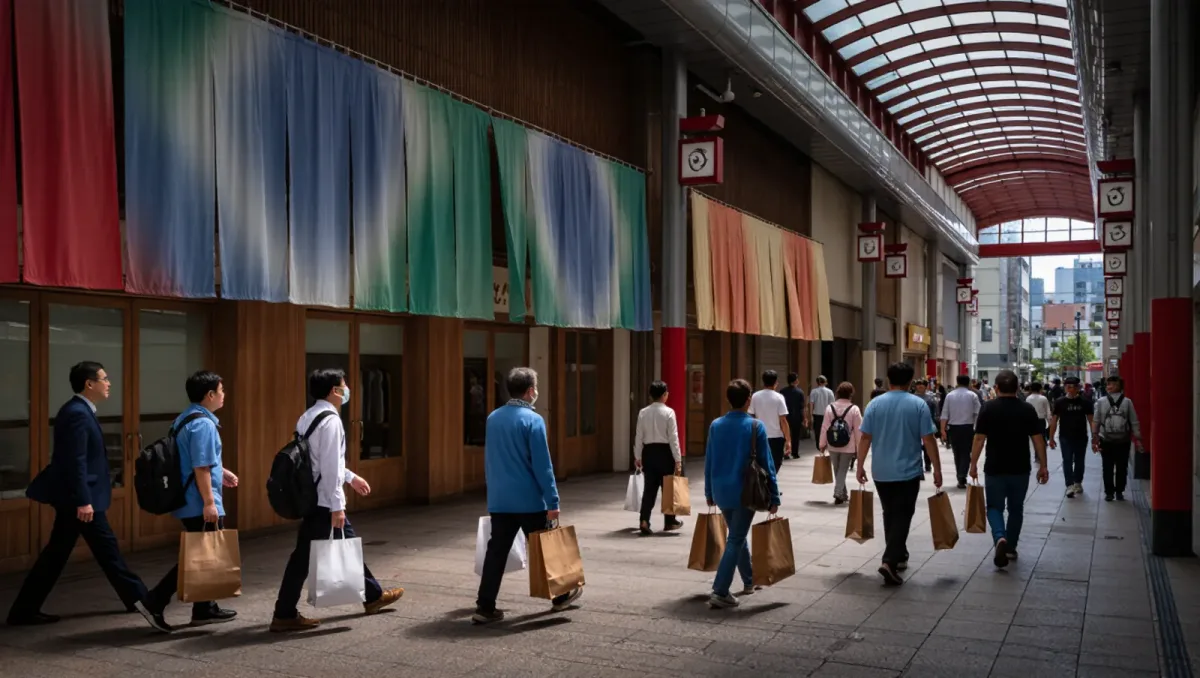
Japan estimated 3,148,600 international visitors in June 2026, per the Japan National Tourism Organization's monthly statistics — one of the strongest months on record in a country that logged a record 42.7 million arrivals across 2025. The trend that matters to a shopping traveler is the ratio behind the headline: visitor growth is flattening while spending per visitor keeps climbing, and shopping consistently ranks among the largest categories of inbound spending, alongside accommodation.
This is tourism-statistics coverage, not a shopping recommendation: aggregate numbers say nothing about the price of any specific item, and the practical value of shopping in Japan now depends more than ever on the exchange rate and the tax procedures you follow.
What do the 2026 numbers actually show?
Three data points frame the year so far. First, arrivals: June's 3,148,600 estimate per JNTO keeps 2026 tracking near 2025's record pace. Second, spending: Japan's Tourism Agency quarterly surveys have reported record foreign-visitor spending figures, with per-visitor amounts reaching new highs as the mix shifts toward higher-spend travelers. Third, composition: shopping has been a top spending category since the ¥8.1 trillion record inbound year of 2024, and the weak yen has kept the pattern intact through 2026.
Related stories: China's 618 Festival Growth Slowed Sharply in 2026 — Tmall Led, and the Deals Came Earlier · Japan's Tax-Free Shopping Rules Change on November 1, 2026 — What Shoppers Need to Plan Ahead.
What does record shopping spend mean for prices in Japan?
Not discounts. Heavy inbound demand is why popular categories — cameras, watches, sneakers, ceramics, kitchen knives — can run thin on stock in tourist-heavy districts, and why the famous gap between Tokyo retail and home-market prices narrows when the yen strengthens. The gap still exists in many categories, but it is a moving number: run the conversion the day you shop, and compare against your home price before assuming the deal is there.
How should a late-2026 trip be planned around shopping?
Two procedural facts carry the planning weight. Japan's tax-free system changes on November 1, 2026: through October 31, eligible visitors get the instant exemption at the register on purchases of 5,000 yen or more per store per day; from November 1, the full tax is paid upfront and refunded at departure. And shipped purchases stopped qualifying back in April 2025, so everything you buy tax-free must travel home with you. Shop the dense districts for range — Ginza, Shinjuku, and the Kappabashi kitchen street — but treat any stock-out as normal: with 3 million-plus visitors a month arriving, the popular shelf is the first thing to empty.