
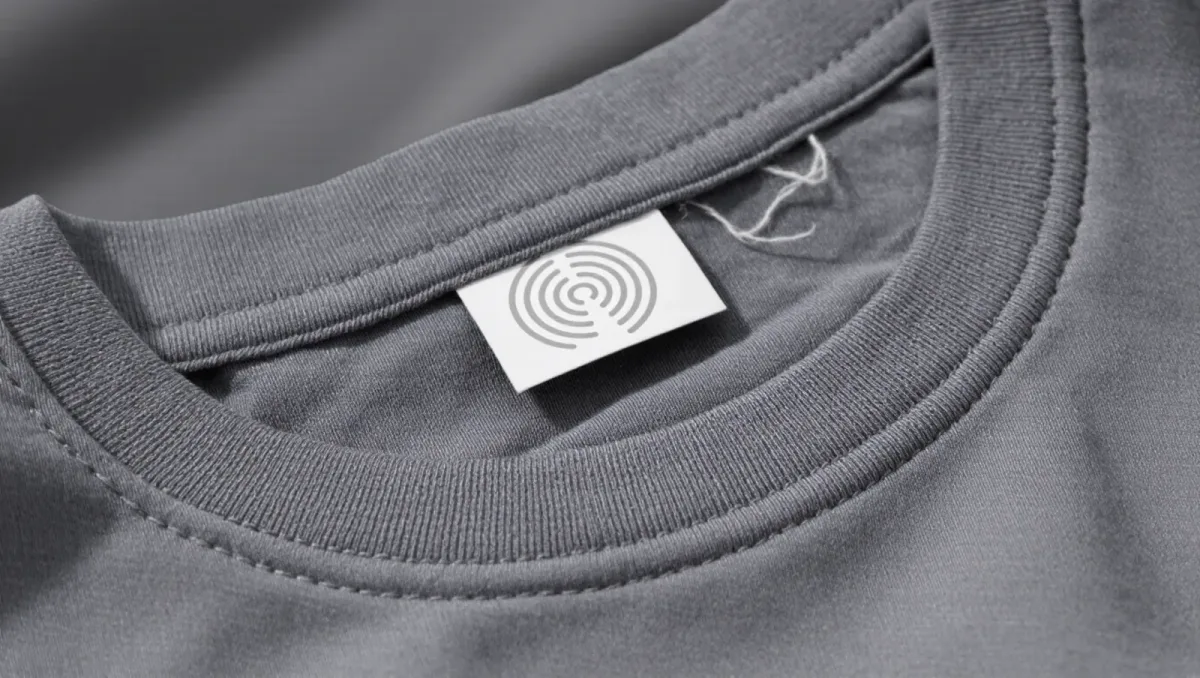
RFID — radio-frequency identification — is why a retailer can tell you online that the size 8 is in stock at your local store: each tagged item carries a tiny chip that answers a radio query without a line of sight, so a staffer with a handheld reader can count an entire wall of clothing in seconds. Adoption reached the point where major apparel retailers including Inditex (Zara), Decathlon, Nike, Uniqlo's operator and Walmart's apparel suppliers made item-level RFID standard through the 2020s, per company disclosures and industry tracking, checked May 2026.
The technology changed retail inventory economics, self-checkout and returns. Here is how it works and what it changes for you as a shopper — including what the tag can and cannot track. This publication publishes information, not technology or privacy advice.
How does RFID actually work in a store?
Each passive RFID tag carries a microchip and a printed antenna, powered by the reader's radio field — no battery. The chip holds a unique identifier (EPC) that links to the retailer's inventory system. Unlike barcodes, tags respond in bulk: hundreds per second, through fabric and cardboard, which is why a stockroom count that took a day takes minutes. The tags typically cost a few cents each, which is the number that made item-level tagging affordable for a $15 t-shirt, checked May 2026.
What does the store get out of it?
- Accurate stock. Retail inventory accuracy typically runs in the 60–75% range without item-level tagging; RFID programs push counts above 95% in documented deployments, per retailer case studies, checked May 2026. Accuracy is what makes buy-online-pickup-in-store possible.
- Faster loss detection. Exit sensors read tag batches; when a whole cart of tagged goods exits unpaid, the pattern is visible in minutes rather than at the next stock count.
- Sizing intelligence. Zara's RFID lets fitting rooms trigger replenishment signals — the associate knows which size left the room, per Inditex technology disclosures, checked May 2026.
- Faster returns and authentication. The tag proves the item came from that chain, which tightens return-fraud defenses at self-checkout and customer service.
Related stories: Why Stores Added Self-Checkout — and Why Some Are Ripping It Out · Why Do Brands Build Flagship Stores They Barely Expect to Be Profitable?.
Can an RFID tag track you after you leave the store?
This is the question shoppers ask, and the honest answer is: the tags are almost always deactivated at checkout, and even if active, passive tags have a read range of meters, not miles — they hold a product code, not your identity, and cannot log your location without a nearby reader. European and US privacy regulators treat RFID under general data-protection rules; the practical privacy exposure comes from what the retailer links the data to at sale — payment and loyalty records — not the chip in the garment. Cut the tag out if you like; the store's knowledge about you lives elsewhere.
How do you spot an RFID tag?
- Soft tags: a thin white or gray rectangle inside garment labels, hangtag labels or wash-care stacks — peel it off after purchase.
- Hard tags: the plastic security bulbs and clips are mostly still EAS (acoustic-magnetic) technology, but newer generations embed RFID; store staff remove both at checkout.
- Shoes and accessories: RFID labels sit under the insole, inside the tongue or in lining pockets.
If a soft tag survives your purchase, it is inert to you and mostly inert to the store — but it can trigger exit alarms, which is why the misread alarm happens on your next visit to the same chain.
What changed at checkout because of RFID?
Two things. First, checkout-free and fast lanes: the technology under some self-checkout replacements reads a whole basket at once — the shopper drops the cart in a bay and the system bills the phone. Second, returns: tagged returns scan instantly and verify origin, which is why some chains can accept cross-channel returns that barcode systems could not. Expect both to expand, checked May 2026.
The bottom line
RFID is inventory truth for the retailer and stock accuracy for you — the size-search feature is the visible tip of it. The chip itself is a price-of-cents tag with a read range of meters; your purchase history is the part worth thinking about.
Where is RFID headed next?
Two directions, both already deployed in pilots: checkout-free formats where the reader handles the whole basket, and supply-chain transparency where the same tag carries washing and recycling history for resale and rental programs. Apparel rental and recommerce are the commercial drivers — a garment that will have five owners needs an identity, and the tag is the cheapest one available, checked May 2026. The tag you peeled off a t-shirt this year is the same architecture the resale platforms will depend on next.